Category: Religion, St. Paul
-

On Phoebe, Honored Courier of St. Paul (Michael Peppard)
We’ve mentioned Phoebe of Kenchreai here at Corinthian Matters as an individual who was not simply a “helper” to St. Paul — one translation of the Greek diakonos) — but also a prostasis, an influential member of some wealth and authority in the earliest Christian community of the region. Michael Peppard has recently published an article in Commonweal (“Household Names:…
-

Holy Fools in Corinth
Corinth always gets the spotlight this time of year in homilies and op-ed pieces about the significance of Christian Holy Week, especially that three-day period known as the “Triduum,” which begins on Maundy Thursday (celebrating Jesus’ last supper), proceeds to Good Friday (the crucifixion), and culminates in Easter Sunday (the resurrection). Corinth is front and…
-

Performing 1 Corinthians
Among the thousands of publications on St. Paul’s letters to the Christians in Corinth, Creating a Scene in Corinth: A Simulation (MennoMedia 2013) stands out for its unique approach to biblical study through simulation and performance. Written by Reta Finger and George McClain, the work invites its readers to experience 1 Corinthians by directly entering…
-

Routledge Encyclopedia of Ancient Mediterranean Religions
This new Routledge Encyclopedia of Ancient Mediterranean Religions, edited by Eric Orlin and a team of collaborators, claims to be the “first comprehensive single-volume reference work offering authoritative coverage of ancient religions in the Mediterranean world.” As the publisher page describes it: The volume’s scope extends from pre-historical antiquity in the third millennium B.C.E.…
-
On the Churches and Saints of Corinth
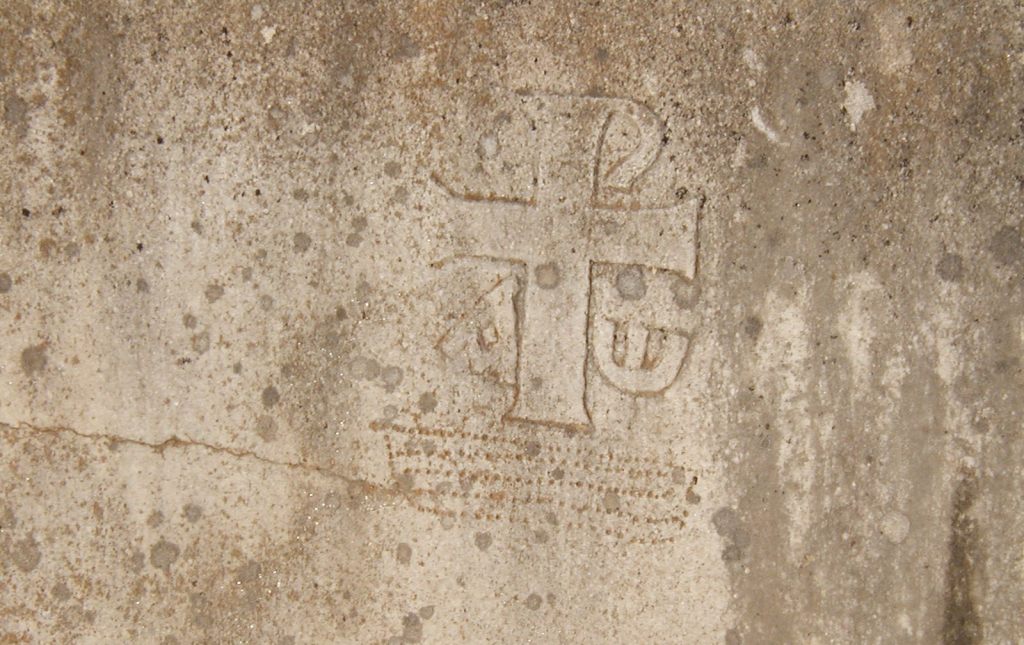
Tomorrow marks the feast day of Kodratos, Corinth’s most famous ancient country saint martyred during the reign of the Emperor Decius. As I noted a number of years ago when I paraphrased a Latin version of his life, Kodratos was Corinth’s quintessential rural saint: an orphan raised by his Father God in the fields and mountains after his parents’ early death. When he descended into the city of sin…
-

An Open Bibliography in Corinthian and New Testament Studies
I’ve just surfaced from a week-long purgatorial session editing and indexing the proof text of The Isthmus of Corinth. It was awful–or maybe it was wonderful–but the manuscript is better for it. And now I now understand why authors sometimes cut corners and pay others to index their works. I’m back on track this morning and eager to deliver my overdue Lenten Wednesday series…
-
2015 Publications in Corinthian Studies: New Testament, Christianity, and Judaism
This is the third in a series of five bibliographic reports related to Corinthian scholarship published or digitized in 2015. This post also marks the next installment in a Lenten series on resources for the study of Judaism, New Testament, and early Christianity in Corinth (see last week’s post on Corinthian-related blogs). Today’s report presents scholarship published or digitized in 2015 related…
-
The Long Lent
The liturgical season of Lent begins today in the western Christian churches. If you don’t know what this is, Lent is a penitential season of fasting, prayer, and almsgiving that culminates in the celebration of Easter / Pascha. As far as liturgical seasons go, it’s a pretty old one that had emerged clearly by the council of Nicaea in AD…
-
The Pauline Church and the Corinthian Ekklesia (Richard Last)
I was interested to see the release of Richard Last’s new book The Pauline Church and the Corinthian Ekklesia: Greco-Roman Associations in Comparative Context (Cambridge University Press 2015), which publishes the author’s 2013 dissertation from University of Toronto. Published as volume 146 in the Society for New Testament Monograph Series, the work adopts a fresh approach to the role of religious associations and philosophical cults and and…
-
Corinthiaka
Every month I sort through hundreds of google alerts, scholar alerts, academia notices, book review sites, and other social media in an attempt to find a few valuable bits to pass along via this site. I ignore the vast majority of hits that enter my inbox, store away those that I plan to develop into their own stories, and then release the ephemera (or those I fail to…
 Corinthian Matters