Category: American School Excavations
-
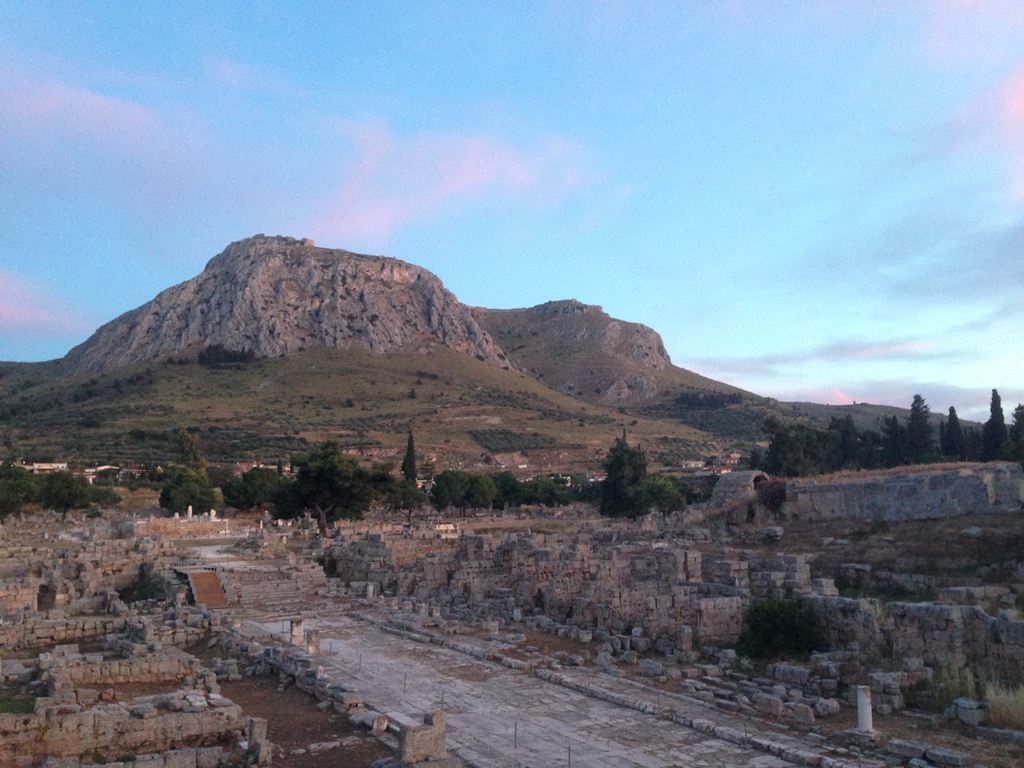
New Management Plan for the Archaeological Site at Corinth
The Mediterranean Institute for Nature and Anthropos (Med-INA), a non-profit scientific organization based in Athens, Greece, has just issued this press release concerning its role in creating a new management plan for the archaeological site of ancient Corinth. Located in North-East Peloponnese, Ancient Corinth is an unparalleled world heritage site. Overseeing two regions and two seas, and endowed…
-
Bridge of the Untiring Sea (Gebhard and Gregory, eds.)
I finally have my hands on Bridge of the Untiring Sea: the Corinthian Isthmus from Prehistory to Late Antiquity, fresh off the press (December 2015) from the Princeton office of the American School of Classical Studies at Athens. I wrote briefly about this forthcoming book in June (here and here). The Bridge has been a long time in the making. It…
-
Classical Archaeology in Context (Haggis and Antonaccio, eds.)
This new book published by Walter de Gruyter GmbH should be of wide interest for classical archaeologists who understand how particular contexts, theory, and method frame archaeological research, data, results, and conclusions at the end of the day. As one of the longest-running excavations in the Mediterranean, references to Corinth are plentiful. I am also…
-
Corinth Excavations, Places and Monuments
The American School of Classical Studies Excavations at Corinth continues to add digital resources that will be of interest and use to archaeologists, tourists, teachers, preachers, writers, and the broader public. In the past, I’ve covered their Field Trip App, which allows anyone with a mobile phone to take a virtual tour of Ancient Corinth with expert summary descriptions, photos,…
-
American School of Classical Studies Concludes 2015 Season
The American School of Classical Studies Excavations at Corinth announced on Friday the conclusion to their 2015 season which focused this season on continuing excavation in the Frankish quarters, conservation of the Good Luck mosaic, excavation in the area of South Stoa, 3D scans of the Fountain of Peirene, among others. Here’s the news release…
-
Corinthiaka at the AIA Meeting: New Orleans, January 2015
One of the small benefits of not attending the annual meeting of the Archaeological Institute of America next month is that I will not have to spend Christmas break frantically working on a paper that I was unable to complete during a busy semester. On the other hand, New Orleans in January should be fantastic,…
-
Roman Tombs in Corinth: Caraher on Walbank on Slane
If you’re a Corinthiaphile who doesn’t read Bill Caraher’s The Archaeology of the Mediterranean World blog, you should check in on it on occasion. Bill has one of the most successful and consistent blogs on ancient Mediterranean world on the interwebs. He has released insightful, smart, and humorous posts almost every day—minus weekends and holidays—since…
-
Ann Brownlee on the Potter’s Quarter
It must be a sign of the official end of summer in the U.S. that the Penn Museum Blog has been running a series of final field reports on field work and study at archaeological sites in Egypt, Iraq, Italy, Xinjiang, Turkey, and Greece. One of these posts comes from Ann Brownlee, Associate Curator of…
-
Digitizing Isthmia with the Archaeological Resource Cataloging System (ARCS)
DKP Introduction: I noted yesterday that the National Endowment for the Humanities recently awarded Jon Frey, Assistant Professor of Art History & Visual Culture at Michigan State University, a major grant for the digital implementation of an open-source application known as the Archaeological Resource Cataloging System (ARCS). I asked Jon more about what his teams…
 Corinthian Matters