Category: Periods, Roman
-

On Phoebe, Honored Courier of St. Paul (Michael Peppard)
We’ve mentioned Phoebe of Kenchreai here at Corinthian Matters as an individual who was not simply a “helper” to St. Paul — one translation of the Greek diakonos) — but also a prostasis, an influential member of some wealth and authority in the earliest Christian community of the region. Michael Peppard has recently published an article in Commonweal (“Household Names:…
-

Dropping into Ancient Corinth (the CyArk and Google Partnership)
Years ago, a visitor to ancient Corinth (and other sites of Greece) had immediate access to most of the archaeological remains within the site. One could stand directly next to one of the standing columns of the Temple of Apollo, or even climb within the Fountain of Peirene, as I know a group of university…
-

A Coin Hoard at Lechaion is not the Real Story
Some more Corinthian clickbait hit us last week in a series of news articles about a coin hoard from Lechaion. We have heard quite a bit in the past about the Lechaion Harbor Project (LHP), a Danish and Greek operation to document the underwater remains at Lechaion since 2013. Their press releases, which come at the…
-
Holy Fools in Corinth
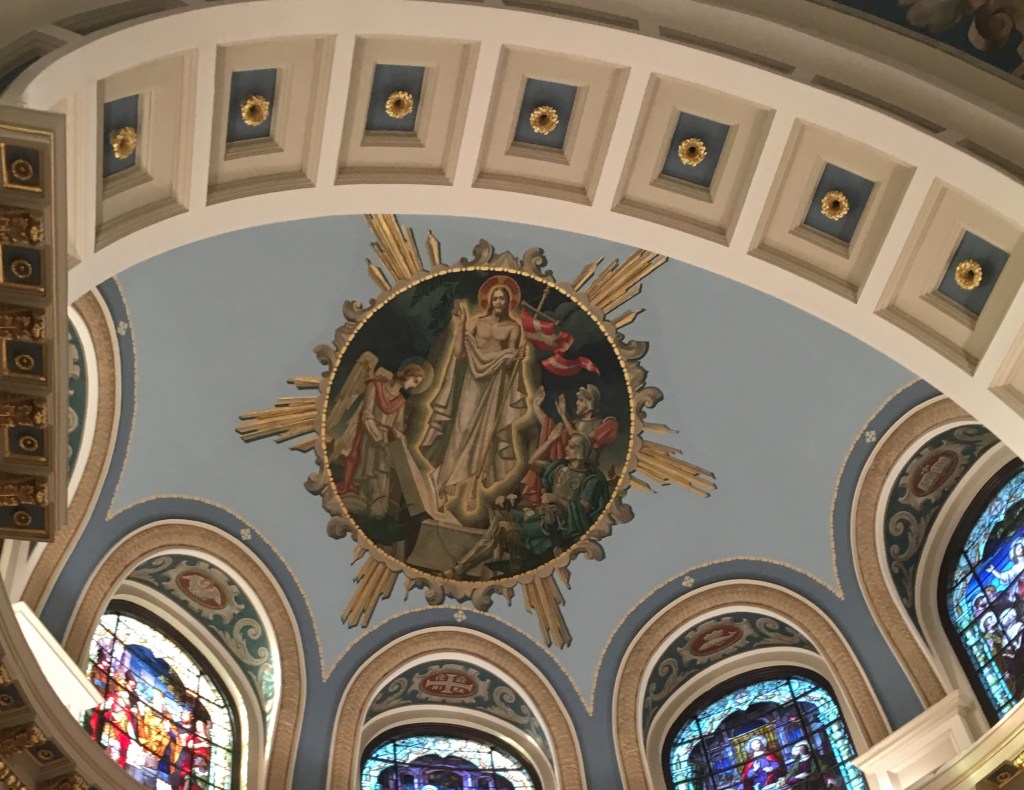
Corinth always gets the spotlight this time of year in homilies and op-ed pieces about the significance of Christian Holy Week, especially that three-day period known as the “Triduum,” which begins on Maundy Thursday (celebrating Jesus’ last supper), proceeds to Good Friday (the crucifixion), and culminates in Easter Sunday (the resurrection). Corinth is front and…
-
Digitizing and Droning Isthmia
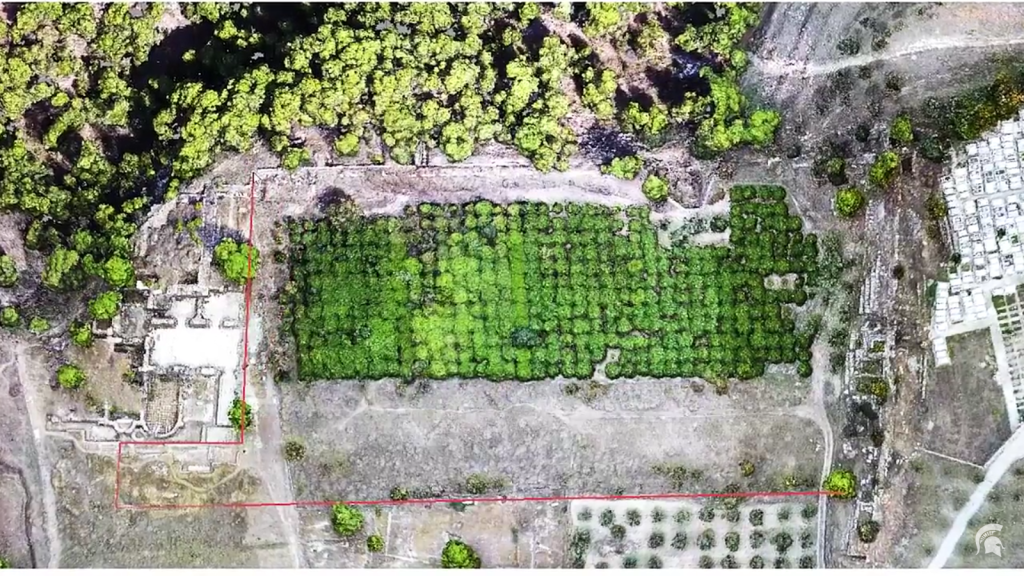
Several years ago I wrote about the interesting work Professor Jon Frey of Michigan State University was doing with collaborators at Isthmia to digitize the excavation notebooks as well as the associated finds and context data. Over the last couple of weeks, MSU has spotlighted Frey’s recent work at the site including his discovery of a gymnasium at the site (now…
-

Performing 1 Corinthians
Among the thousands of publications on St. Paul’s letters to the Christians in Corinth, Creating a Scene in Corinth: A Simulation (MennoMedia 2013) stands out for its unique approach to biblical study through simulation and performance. Written by Reta Finger and George McClain, the work invites its readers to experience 1 Corinthians by directly entering…
-
Public Monuments in Roman Greece: A New Database
A colleague sent me this link to Dr. Christopher Dickenson‘s new database and website devoted to the public monuments of Roman Greece. The platform and the content are still under development, but the website already makes available records for a substantial number of monuments known from Pausanias for three cities of Roman Greece. With its aim to presen all monuments known from text and…
-
Crowdsourcing Paul’s Letters to Corinth
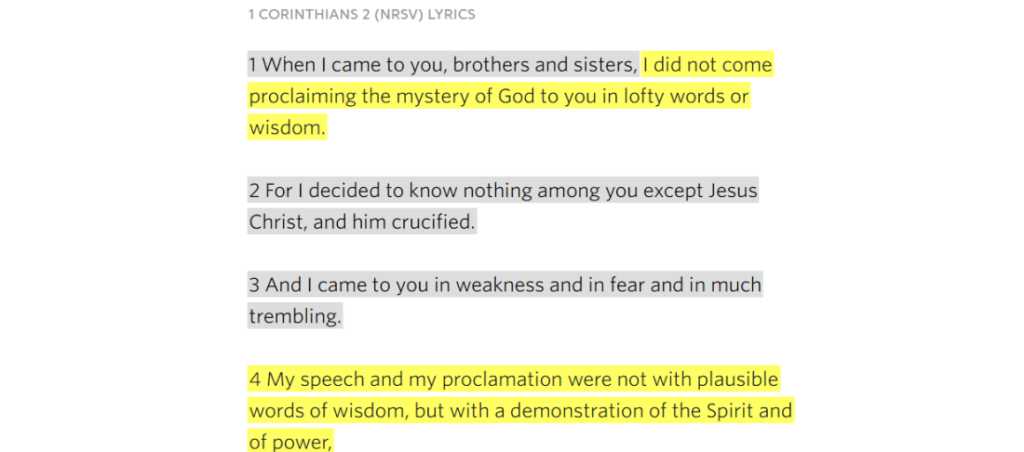
Last week I noted a few of the many new tools and online sites available for reading and interpreting Paul’s Corinthian correspondence. I was a little surprised to find so few digitally annotated commentaries on 1 and 2 Corinthians given the relative ease of coding a text through TEI markup language, the availability of online platforms that have simplified the process, and the currency of crowdsourcing in the digital…
-

More on the Lechaion Harbour Project
The news site Haaretz ran a story last week about the Lechaion Harbour Project that circulated through the news networks. I didn’t see too much in the story that was new or different than the press release that went global in late December (which we covered here). In reading the Haaretz piece, though, I discovered this little article published at the Carlsberg Foundation…
-
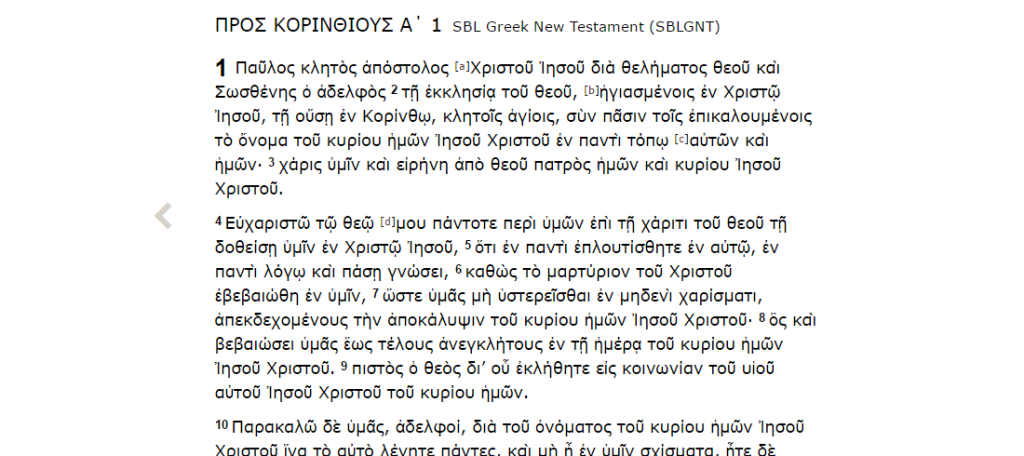
Reading 1 and 2 Corinthians in the Digital Age
A few years ago, a survey by the Pew Research Center’s Forum on Religion & Public Life found that Americans on average were broadly illiterate about the core beliefs, writings, and teachings of Judaism, Christianity, and Islam. Only about half of Americans, for example, know the Koran is the sacred text of Islam, Martin Luther was somehow associated with the Protestant Reformation, or…
 Corinthian Matters