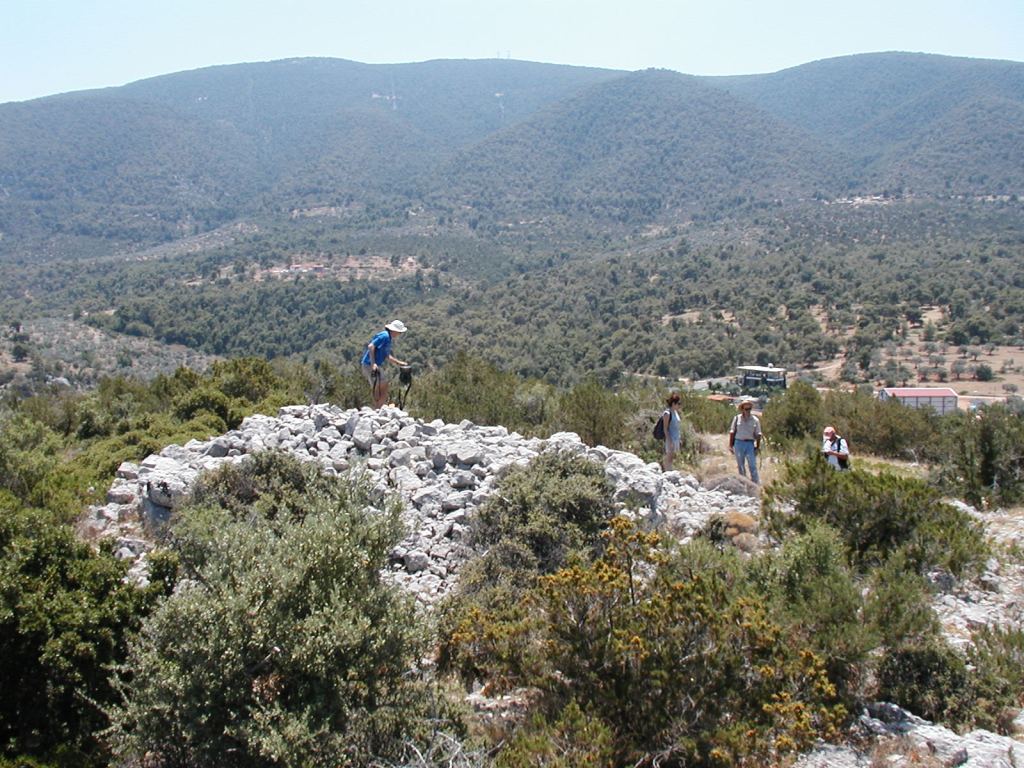
The fall was a difficult season for the Corinthian archaeology community.
As the academic year was starting, we heard the sad news that James Wiseman, well-known Corinthian archaeologist, passed away on August 12 at the age of 92. Wiseman was an archaeologist’s archaeologist. He worked to establish archaeology as a stand-alone discipline in the United States, not simply a subfield of classics or anthropology. One-time president of the Archaeological Institute of America, he also founded the Department of Archaeology at Boston University (the first of its kind in the U.S.) as well as the first-rate Journal of Field Archaeology. Wiseman carried out fieldwork in a range of regions, but he clearly had a special place in his heart for the Corinthia. He excavated the gymnasium at Corinth in the 1960s and mastered the history and archaeology of the urban center well enough to write a gargantuan synthetic article in 1979 spanning 120+ pages titled “Corinth and Rome I: 228 B.C.-A.D. 267,” which became a foundational work for later scholarship.
I never knew Wiseman personally, but it sometimes felt like I knew him from his work on the Corinthian countryside, Land of the Ancient Corinthians (1978). That book I faithfully carried to and from Greece every summer for years with its tattered cover and taped up binding. Wiseman carried out his extensive survey of the entire Corinthia in his free time (!) during the years he was participating in excavations and study at Corinth, using the weekends to walk into the fields with his wife Lucy, two sons, and his friends simply to document what he could see on the surface. While many of his observations have been challenged or finetuned over the years, his work at the time was enormously important in populating the ancient Corinthian countryside with documented sites, some of which have since vanished in the rapid development of the landscape. It’s hard to imagine what the Eastern Korinthia Archaeological Survey (or other regional surveys) would have looked like without LAC, or how scholarly studies of the trans-Isthmus fortification walls (the subject of his Ph.D. dissertation) could have developed without his pioneering work.
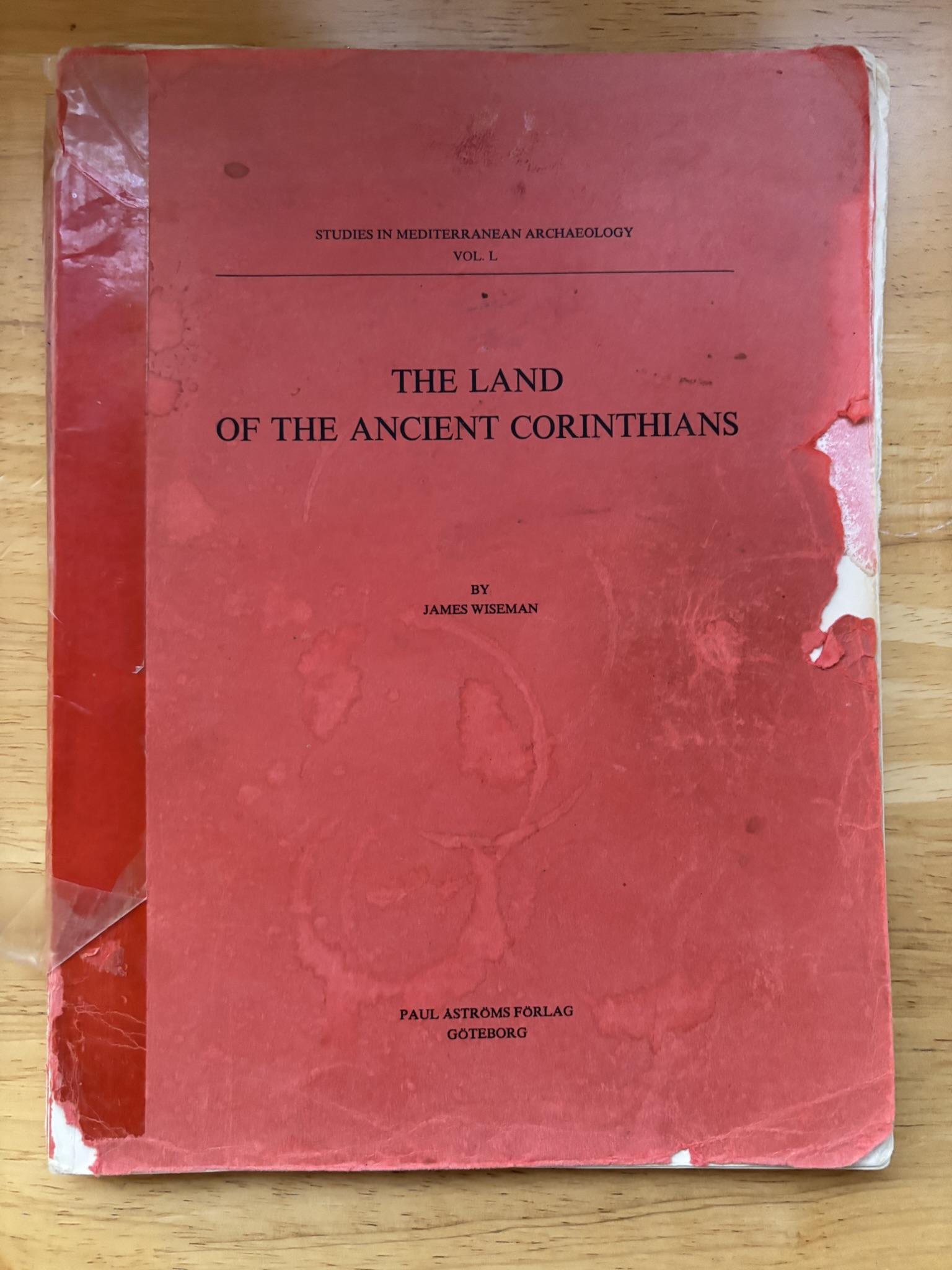
I can only expect that I will continue to encounter Wiseman when I pull my tattered copy of LAC off the shelf to learn about sites of the region, or encounter the remnants of his archaeological work in the little “Wiseman piles” of pottery and tile that can still be found at some of the sites of the region. (For another tribute to Wiseman and his legacy, check out this post from the American School of Classical Studies).
I was thinking about how I might write a tribute to Wiseman’s work here when I learned that Corinth’s long-time excavation director, Charles K. Williams II, died on September 16 at the age of 96. Mr. Williams, as many knew him, directed the Corinth Excavations for some three decades, modernizing its methods by adopting a more deliberately systematic and stratigraphic approach to fieldwork and documentation that prioritized understanding soils and assemblages as much as building remains. Williams was a giant in Corinthian archaeology. He anonymously funded (and designed) many of the archaeological facilities in Ancient Corinth and student fellowships, and he started the excavation training program for students of the ASCSA in the 1960s that students still participate in today (as I did in 2005). Mr. Williams left a long trail of yearly publications in Hesperia from the 1960s to 1980s that documented his excavations east of the theater, in the Frankish quarter south of the museum, in the forum and elsewhere. One of his outstanding legacies, in my view, was treating post-classical occupations of the city in their own right, not blasting through medieval remains like classical archaeologists had often done before, but giving them due care and attention.
I only met Mr. Williams once, twenty years ago, while dining one fall evening at the American School’s Hill House in Ancient Corinth. “It’s so nice to meet you, Mr. Williams,” I said, and he quipped, “Well I haven’t yet decided whether it’s nice to meet you.”
When I heard about Mr. Williams’ death, I happened to be reading parts of Lucy Shoe Merritt’s 1984 History of the American School of Classical Studies at Athens and came upon these short little passages recognizing his impact as a teacher of archaeology. I’ll share them here as a little tribute to the legacy of good archaeological training that Williams established.
“Charles Williams took up his duties as Field Director of the Corinth Excavations in July 1966; by spring 1967 he saw the potential in a two-week training session which would be offered to all regular students of the School who would appreciate the opportunity to learn something of excavation methods and techniques regardless of whether they have an interest in continuing further in field work. The value of this training has been amply attested by nearly all students of the School ever since. It is recognized by many alumni of the School as one of the most significant of the varied kinds of training and experience the year at the School offers classical students whatever their special talents and inclinations….to those many more [School students] who have been a part of revived Corinth since 1967, Corinth means Charles Williams.” (100, 168)
The ASCSA recognized Mr. Williams’ influence by putting together a warm tribute, and the New York Times covered his story last month.
As I was thinking about my tributes to Wiseman and Mr. Williams, I heard the sad news that Yannis Lolos, professor at the University of Thessaly, passed away at 58 after a long illness. I knew Yannis from my time at the American School of Classical Studies in Athens. He was a tremendous scholar and wonderful human being. He published a couple of massive works on his survey of the city of Sikyon and its territory, as well as many other articles, some on ancient Corinth. Some 15 years ago, I wrote a review of his work Land of Sikyon. I noted then what a magnum opus it was, representing a massive undertaking that required thousands of hours of work. As Wiseman did for the ancient Corinthia, Lolos spent time carefully documenting Sikyonia through extensive and intensive survey, and carried out a first-rate urban survey of the city.
Kathleen Lynch, Chair of the ASCSA Managing Committee, collected memories of Yannis for a tribute to share with members of the American School of Classical Studies. Beyond his scholarship, Lynch remarked, Yannis will be remembered for “his generous spirit, good humor, and kindness to all” and for his exceptional spirit. Lynch shared some funny stories told by fellow students, my favorite being the time “Yannis tried to teach the American students a Greek card game called “Xeri,” but forgot to tell them all the rules, so they thought he was making it up.”
My friend, Bill Caraher, reminded me that Lolos spent a day with us out at Ano Vayia in the southeast Corinthia more than twenty years ago. As I recall, he arrived late–perhaps a couple of hours, perhaps an entire day. We had a generative conversation about defensive fortifications and farming in the region as well as the meaning of survey data. I looked through my old photographs and found a couple of gems from his visit, which reminded me that we talked about towers as well.
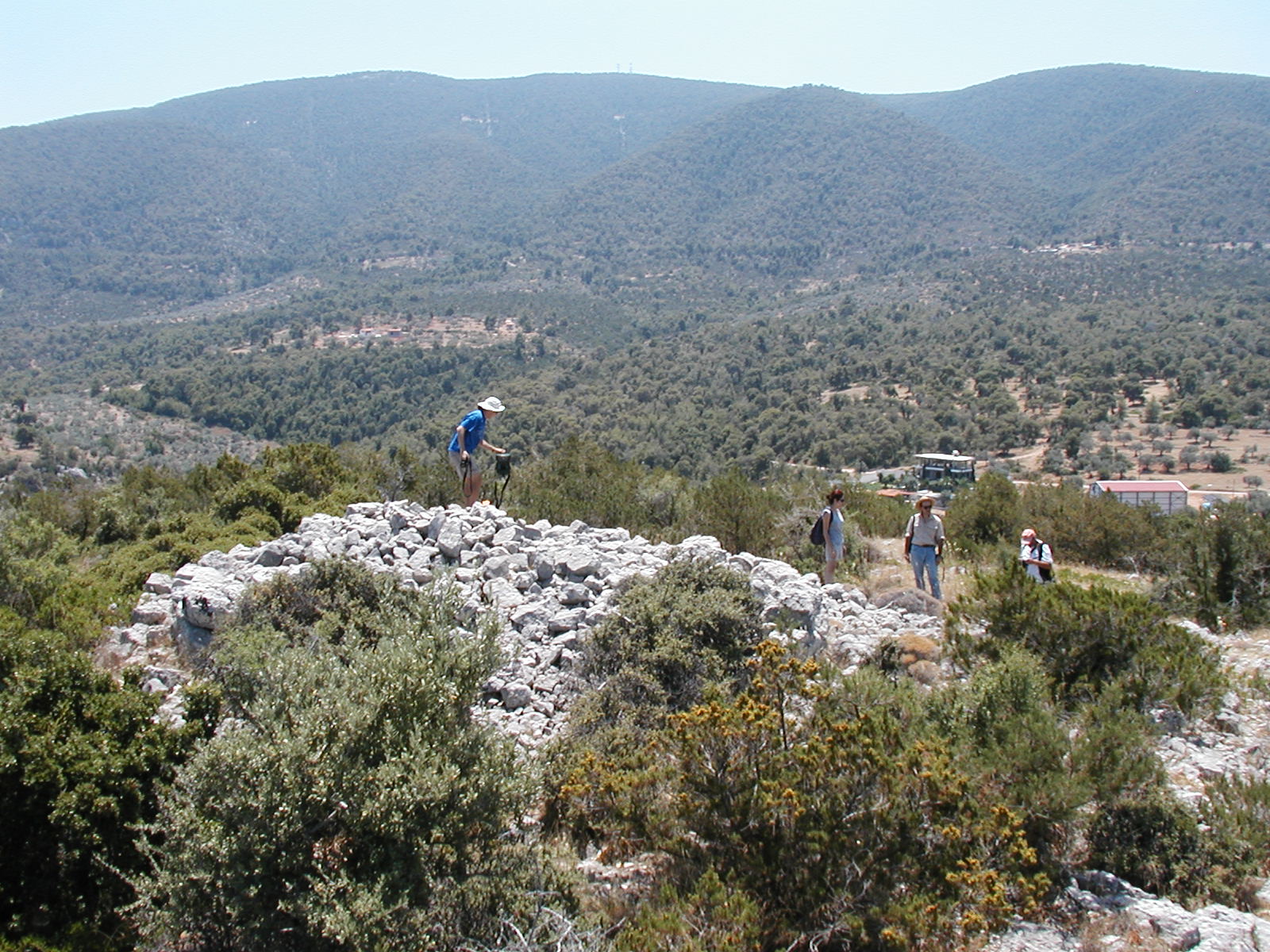
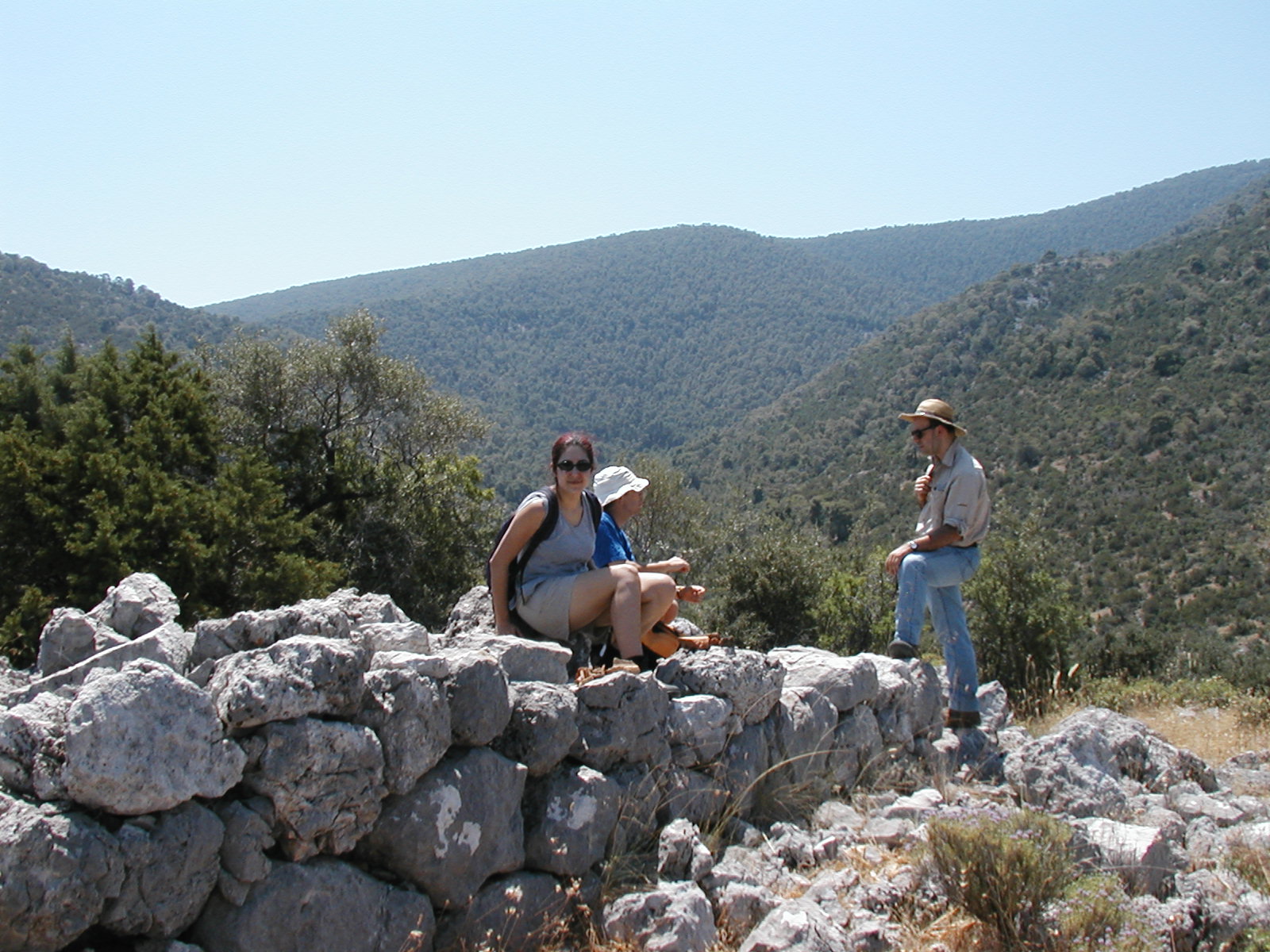
I hadn’t seen Yannis in a long time, but I will always remember him as a funny, kind, and generous scholar and person.
Some years ago, at a Corinthian conference I attended, a speaker (perhaps it was Mr. Williams) stood up and gave one of those speeches about standing on the shoulders of giants. I know it’s the kind of thing people say when they’re talking about legacies of past scholars, but it’s also sometimes true. So much of our work as scholars depends on people who devote years of their lives to understanding the character and history of particular places, invest in the communities around them, and pass on knowledge and rich perspective to succeeding generations of students and scholars.


Leave a Reply